The starting point of this research is so concrete it almost sounds mundane: during the cleanup of Fukushima Daiichi, the robots deployed in contaminated areas relied on LAN cables to communicate with their operators, resulting in tangled wires and increasingly complicated operations. In an environment where no human can set foot without risking their life, the biggest logistical obstacle was… cable management. There's something tragically ordinary about that.
The solution developed by the Institute of Science Tokyo is elegant in the problem it solves: a 2.4 GHz Wi-Fi receiver capable of operating under radiation doses roughly 1,000 times higher than what conventional electronics can withstand, surviving exposure of up to 500 kilograys. To put the scale in perspective, electronics designed for space need to endure between 100 and 300 grays over three years — a robot inside a nuclear reactor faces that same dose in six months.
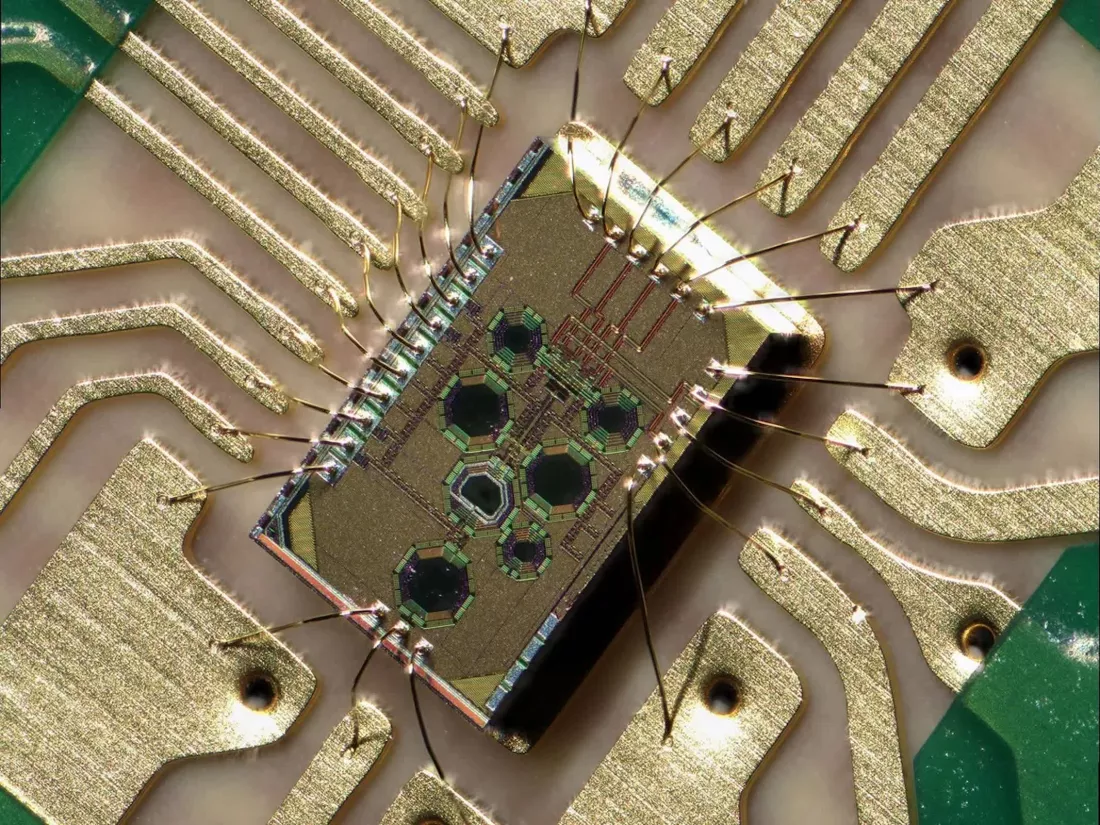
The engineering behind it is quite clever. The team reduced the total number of transistors in the chip, replaced PMOS transistors — more vulnerable to radiation — with inductors that have no oxide layer, and enlarged the remaining transistors to reduce edge-related degradation effects. Fewer transistors, less surface area for radiation to damage. Sometimes the most elegant solution is the most minimalist one.
The test results were impressive: after cumulative exposure to 500 kGy, signal gain dropped by just 1.4 decibels and power consumption decreased only slightly — performance still comparable to standard commercial Wi-Fi receivers.
The next challenge is building a transmitter, which is technically harder. An earlier prototype failed at 300 kGy, and the team is now exploring materials such as diamond semiconductors to match the receiver's resilience.
The timing also carries symbolic weight: nearly half of the 423 nuclear reactors currently in operation are expected to enter decommissioning by 2050 — a vast market for a technology that, until now, was still tethered to cables. And 2026, as it happens, marks the 15th anniversary of the Fukushima disaster.
At its core, this is a story about how the most sophisticated technological innovation sometimes grows out of the most prosaic necessity imaginable: freeing a robot that got tangled in a wire.






The starting point of this research is so concrete it almost sounds mundane: during the cleanup of Fukushima Daiichi, the robots deployed in contaminated areas relied on LAN cables to communicate with their operators, resulting in tangled wires and increasingly complicated operations. In an environment where no human can set foot without risking their life, the biggest logistical obstacle was… cable management. There's something tragically ordinary about that. The solution developed by the Institute of Science Tokyo is elegant in the problem it solves: a 2.4 GHz Wi-Fi receiver capable of operating under radiation doses roughly 1,000 times higher than what conventional electronics can withstand, surviving exposure of up to 500 kilograys. To put the scale in perspective, electronics designed for space need to endure between 100 and 300 grays over three years — a robot inside a nuclear reactor faces that same dose in six months. The engineering behind it is quite clever. The team reduced the total number of transistors in the chip, replaced PMOS transistors — more vulnerable to radiation — with inductors that have no oxide layer, and enlarged the remaining transistors to reduce edge-related degradation effects. Fewer transistors, less surface area for radiation to damage. Sometimes the most elegant solution is the most minimalist one. The test results were impressive: after cumulative exposure to 500 kGy, signal gain dropped by just 1.4 decibels and power consumption decreased only slightly — performance still comparable to standard commercial Wi-Fi receivers. The next challenge is building a transmitter, which is technically harder. An earlier prototype failed at 300 kGy, and the team is now exploring materials such as diamond semiconductors to match the receiver's resilience. The timing also carries symbolic weight: nearly half of the 423 nuclear reactors currently in operation are expected to enter decommissioning by 2050 — a vast market for a technology that, until now, was still tethered to cables. And 2026, as it happens, marks the 15th anniversary of the Fukushima disaster. At its core, this is a story about how the most sophisticated technological innovation sometimes grows out of the most prosaic necessity imaginable: freeing a robot that got tangled in a wire.